
Mechanical and plant engineering sector
Counsel for the Supply Side in Mechanical and Plant Engineering
For the Supply side
Those who build machines and industrial plants live by engineering skill, precision and the trust of their customers. But this business has a side that never appears in a brochure: you perform before you are paid. You develop solutions on the basis of specifications that change as the project progresses. You are part of project chains in which delays and problems caused by others hit you directly — even though you neither caused them nor could control them. And when a dispute arises, you face a risk position fundamentally different from that of the customer: your work has been done, your capital is tied up, and the party that is supposed to pay usually holds the stronger position.
This applies to the main contractor who owes a turnkey result while depending on its subcontractors. It applies just as much to the subcontractor contributing an individual plant component while having to hold its ground between the main contractor above and its own suppliers below. And it applies to the component manufacturer delivering drives, control systems or specialised parts into a project whose overall scale it neither oversees nor controls. Different roles in the project chain, but the same basic situation: you have performed, and now you need to make sure that your performance is recognised and paid for.
This is where I come in.
For many years, I have advised and represented companies in the mechanical and plant engineering sector on the supply side. I have worked on major projects in which main contractors and subcontractors disputed substantial amounts, and I have represented mid-sized suppliers having to assert their position against customers of significantly greater economic strength. I know the language of specifications and acceptance records. I know what happens when a specification is changed later and the customer then acts as if it had been agreed that way from the start. I know how defect notices are used to delay payment. And I know what it means for a business that has performed properly and still has to fight for its money.
Why the supply side? Because in more than two decades of legal practice, I have seen that those who create the actual value — those who design, manufacture, assemble and deliver — are often the least well protected from a legal point of view. Their contracts are dictated by the customer. Their change orders are delayed. Their warranty risks are drafted one-sidedly. And when a dispute arises, they often lack a lawyer who not only knows the law, but also understands their industry, their processes and their commercial reality.
And if your business extends across borders – customers abroad, projects abroad, lawsuits from abroad – I am also your contact person, because international procedural law is my second area of specialization.
There is hardly any field in which the core idea of LEGAL+ becomes clearer than in mechanical and plant engineering: thinking about contracts with a view to conflict, and handling conflicts with a view to the business.
When clients come to me
Most clients do not come to me with a legal category, but with a situation:
A customer refuses acceptance — not because the plant does not work, but because it alleges defects in order to delay the final payment. Or the project has stalled, and the dispute now concerns change orders: what was agreed, what was an additional service, and who pays for the extra effort? A supplier finds that the customer changed the specification during the project and now insists on the original price. A main contractor is exposed to the end customer for delay caused by a subcontractor who concealed its own supply bottleneck.
These are not exceptions. They are the core conflicts of mechanical and plant engineering, in ever new constellations. They arise where technical complexity meets commercial pressure — and where contractual provisions are either missing or fail to deliver what the customer wrote into them.
In these situations, I work on two levels: if the conflict is already there, I represent you — in court, in arbitration and in negotiations. If the contract is still being drafted, I make sure that these very conflicts either do not arise in the first place or are structured in your favour from the outset. In both cases, the same things matter: sector knowledge, litigation experience and the willingness to engage with your specific case as deeply as necessary.
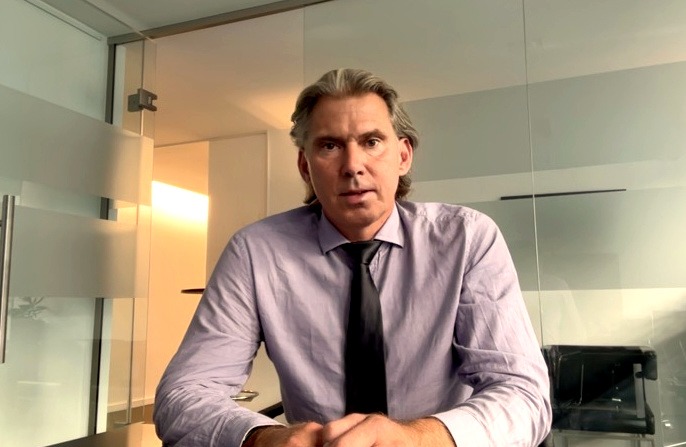
How I work
Every mandate begins with a sober assessment: What is the factual and legal position? What can be proven? What makes commercial sense — and what does not?
I will tell you openly how I assess the situation, even if the answer is uncomfortable. I do not pursue proceedings unless there is a realistic prospect of advancing the client’s interests. And I will recommend a settlement if it is the better solution — even if a judgment would be more dramatic.
What you can expect from me: a lawyer who handles your case personally. Not a rotating team. Not an apparatus built around billing. One point of contact who knows the facts, is available and takes responsibility for the result.
What I expect from you: full candour. Complete documents and honest information, including on the uncomfortable points. Only on that basis can I handle a matter in a way that will stand up in court.
When your business crosses borders
Machines and industrial plants move across borders. Your customers are based abroad, your projects span multiple jurisdictions, and when a dispute arises, the questions immediately become: which court has jurisdiction, which law applies, and how can a judgment be enforced abroad? International civil procedure is my second focal area — and in the export-driven mechanical and plant engineering sector, the two naturally come together.
Learn more:
CLIENT TESTIMONIALS
We first met Attorney Daniel Meier-Greve in 2014 and can state that we found a highly competent expert in the field of business law. It is rare nowadays to encounter such a dedicated lawyer—one who not only listens to a company’s concerns but also shows remarkable initiative in familiarizing himself with and thinking along the lines of the company’s philosophy.
On the basis of a recommendation, we retained Attorney Meier-Greve in a highly complex litigation matter. He familiarized himself with the case in an impressively short time. He identified litigation risks without glossing over them and then developed and successfully implemented a targeted strategy together with us. Particularly noteworthy is his consistently transparent approach and his dedication. He truly takes every case personally and is available to his clients around the clock!
Many thanks for your long-standing, dedicated support, which ultimately led to a very successful outcome.
It was a real uphill battle.
In search of a litigation lawyer, we were introduced to Attorney Daniel Meier-Greve through a recommendation and entrusted him with a complex dispute. From the very first contact, Mr. Meier-Greve gave us the reassuring sense that we were in good hands. After the initial alignment, I was able to fully refocus on my daily business while Mr. Meier-Greve took care of everything else and kept me transparently informed. I particularly value his pragmatic approach and his strength as a skilled negotiator. Today I can look back on a successfully resolved matter and know without hesitation whom I will entrust again with JPL’s legal affairs when needed.
"Dear Mr. Meier-Greve,
When assigning the mandate, I trusted my instincts after our initial meeting — and as I now know, I was absolutely right to do so.
I would now like to thank you.
First of all, thank you for your patience and openness in responding to my questions and objections, and also for your constant dedication to presenting the best possible outcome in court.
With your professional expertise, you explained all the legal issues and procedures to me in a clear and understandable way, which gave me a great sense of confidence.
I always had the feeling that you took your mandate very seriously and were fully committed to the case.
My impression was that you were always attentive to my needs and that you consistently went above and beyond throughout the entire process.
I would also like to add another word of praise: at all times I felt that you genuinely cared about me as a client and that you were truly pleased to be able to help me and win the case for me.
You didn’t ‘just do your job’ — it was evident that you had the motivation to do everything possible to support me as your client. I found this especially positive and consider it exceptional.
I was very pleased to handle this case together with you. Looking ahead, I hope I will not need your services in another civil lawsuit. But I am very glad to have met you as a remarkable person.
Best regards to Hamburg
CONTACT

kontakt@legal-plus.eu
+49 (40) 57199 74 80
+49 (170) 1203 74 0
Bleichenbrücke 11 D-20354 Hamburg
This post is also available in: DE